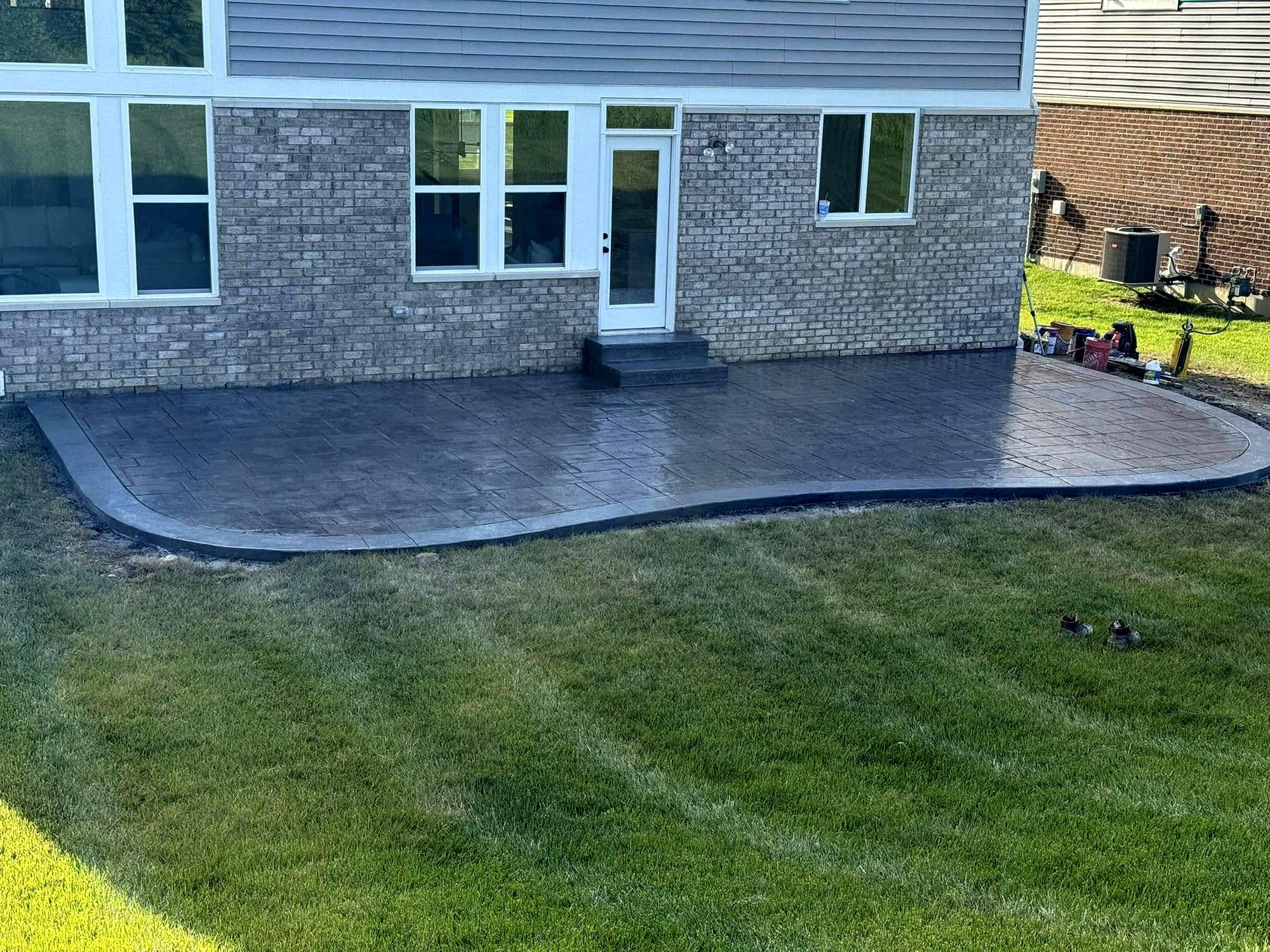
Stamped concrete is one of the most popular ways to build a patio in Southwest Ohio, and for good reason. It gives you the look of natural stone, slate or brick in one seamless surface, in almost any shape you want. Before you get estimates, here's what to know about how it's built, how long it lasts, what drives the price and how to keep it looking good through our winters.
What is stamped concrete?
Stamped concrete is a concrete slab that's colored and pressed with textured mats while it's still workable. The mats leave the pattern and texture of stone, slate, brick or even wood planks. Once the concrete cures, it's sealed to protect the color and give it a finished look.
Because it's poured in place, it can follow curves, wrap around a fire pit or flow into a walkway, and it doesn't have the gaps between individual pieces that some surfaces do.
Why homeowners choose it
- A custom look: dozens of patterns and color combinations, including contrasting borders.
- A smooth, continuous surface: furniture, grills and planters sit level, with fewer joints to catch chair legs.
- Any shape: curves, steps and wraparound designs are easy to form.
- Good value for larger spaces: one pour can cover a big area efficiently.
- Pairs well with features: seat walls, fire pits, outdoor kitchens and lighting all tie in naturally.
How a stamped concrete patio is built
Knowing the steps makes it easier to compare contractors, because most long-term problems start with shortcuts in the early ones.
- Site prep and grading: removing the old surface, digging to the right depth and sloping the area so water drains away from your house.
- Base: a layer of compacted gravel that gives the slab firm, even support.
- Forms: boards that set the shape, edges and height of the patio.
- Pour and color: the concrete is placed and leveled, and color is added.
- Stamping: textured mats are pressed into the surface at just the right time.
- Control joints: cuts that guide where the slab cracks as it moves, so cracks stay straight and blend into the pattern.
- Curing and sealing: the concrete gains strength, then gets a protective sealer.
Foot traffic is typically fine after a day or two, and furniture after about a week. Concrete keeps curing and gaining strength for about 28 days.
How long does stamped concrete last?
A well-built stamped concrete patio can last for decades. The slab itself is very durable. What wears first is the surface: the color can fade and the finish can dull if the patio isn't resealed.
How long yours lasts depends mostly on three things: how well the base was prepared, whether water drains away properly, and how consistently it's sealed and cared for.
What affects the price
Every patio is priced individually, but these are the factors that move the number most:
| Factor | Why it matters |
|---|---|
| Size | Bigger patios cost more overall, but often less per square foot because setup is spread over more area. |
| Pattern and colors | A single color and simple pattern costs less than multiple colors, accent borders or hand-detailed finishes. |
| Site conditions | Removing an old patio, regrading a slope or limited access for equipment all add labor. |
| Shape and steps | Curves, multiple levels and steps take more forming and finishing time. |
| Added features | Seat walls, fire pits, lighting and outdoor kitchens are priced on top of the patio itself. |
The best way to compare quotes is to make sure each one covers the same size, pattern, colors, base preparation and sealing.
Caring for stamped concrete through Ohio winters
Freeze-thaw cycles and deicing salt are the two biggest threats to any concrete in our area. A little routine care goes a long way:
- Reseal every few years, or sooner if the surface looks dull or water stops beading up.
- Skip rock salt, especially the first winter. Use sand for traction or an ice melt labeled safe for concrete.
- Shovel with a plastic blade to avoid scratching the sealer.
- Wash it with a garden hose and a mild cleaner. Avoid harsh chemicals that can damage the sealer.
- Keep gutters and downspouts directing water away from the patio so it doesn't pool or wash out the base.
What about cracks?
All concrete moves a little as the ground freezes, thaws and settles, so small hairline cracks over the years are normal and don't mean the patio is failing. Well-placed control joints keep most of that movement in lines you won't notice.
Wide cracks, sinking sections or edges that heave are a different story. Those usually point to a problem with the base or drainage, which is why preparation matters more than anything else.
Is stamped concrete right for your yard?
It's a great fit if you want a custom, seamless look, you're covering a medium or large area, and you don't mind resealing every few years. It may not be the best choice if you're looking for a surface that never needs any upkeep, or if you expect to dig under the patio for utilities later, since patched sections are hard to match.
The bottom line
Stamped concrete gives you a beautiful, durable patio when it's built on a solid base and cared for properly. Through our sister company, Crystal Clear Concrete, we've built stamped concrete patios, walkways and porches throughout Mason, West Chester and Greater Cincinnati. Request a free estimate and we'll show you patterns, colors and finished patios near you.